Utilization of Radioactive isotopes in biogenetic studies
Isotopes
Isotopes
Atoms are the tiny building blocks of any element. Each atom has three main parts:
- Protons, which have a positive charge
- Neutrons, which have no charge
- Electrons, which have a negative charge An isotope is a form of a chemical element that has the same number of protons but a different number of neutrons in its nucleus.
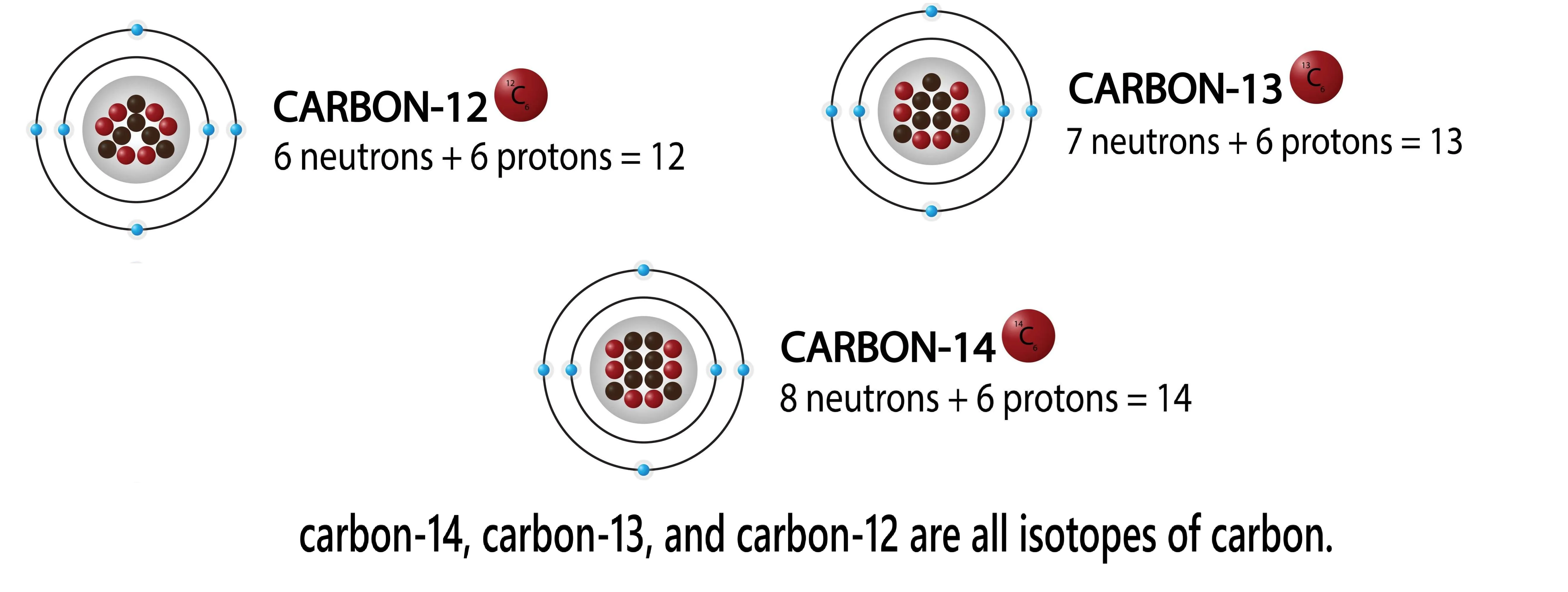 In other words, the isotopes can also be defined as the “one of two or more forms of a chemical element that have different physical characteristics but the same chemical characteristics”. An isotope is a variation of an element that possesses the same atomic number but a different mass number.
Radioactive Isotopes
Radioactive Isotopes
Some isotopes have unstable atomic nuclei that undergo radioactive decay in the form of alpha, beta, and gamma rays. These isotopes are radioactive in nature and are, therefore, known as radioisotopes.
Examples of radioactive isotopes include carbon-14, tritium (hydrogen-3), chlorine-36, uranium-235, and uranium-238.
Radioactive Isotopes in Plant Biogenetics (Basic Understanding)
Radioactive Isotopes in Plant Biogenetics (Basic Understanding)
A radioactive isotope is almost identical to the normal atom of the same element. For example, Carbon-14 (^14C) behaves just like normal carbon (^12C), and Phosphorus-32 (^32P) behaves like normal phosphorus (^31P). The plant cannot distinguish between the radioactive isotope and the normal atom because they have the same chemical properties. Therefore, the plant absorbs and uses radioactive isotopes in exactly the same way as normal elements during photosynthesis, respiration, nutrient uptake, protein synthesis, and other metabolic processes.
The only difference is that radioactive isotopes have unstable nuclei. To become stable, they continuously release small amounts of energy in the form of alpha (α), beta (β), or gamma (γ) radiation. This radiation acts like an invisible signal or "tag" that can be detected using special instruments such as a Geiger-Müller counter, scintillation counter, or by autoradiography. For example, when a plant is supplied with radioactive carbon dioxide (^14CO₂), the plant absorbs it during photosynthesis just as it would absorb normal carbon dioxide. The radioactive carbon becomes part of glucose, starch, sucrose, and other organic compounds. By detecting the radiation emitted by ^14C, scientists can determine where the carbon has moved, how quickly it is transported, and which plant organs receive it, such as the leaves, stems, roots, fruits, or seeds. Similarly, when ^32P is supplied to a plant, it is absorbed as phosphate and becomes incorporated into DNA, RNA, ATP, and phospholipids. By tracking the radioactive phosphorus, researchers can study DNA replication, gene expression, energy transfer, and nutrient transport.| Commonly Used Isotopes | Application in Biogenesis |
|---|---|
| Biosynthesis of Phytochemicals | |
| Carbon-14 (C-14) | Tracking carbon atoms in organic compounds |
| Phosphorus-32 (P-32) and Phosphorus-33 (P-33) | DNA, RNA, and ATP studies |
| Tritium (Hydrogen-3 or H-3) | Labelling lipids and nucleotides |
| Nitrogen-15 (N-15) | Protein and amino acid studies |
| Sulfur-35 (S-35) | Studies of sulfur-containing proteins such as methionine and cysteine |
| Commonly Used Isotopes | Application in Biogenesis |
| Biochemical Pathway Tracing | |
| Radioactive carbon (C-14) | used to elucidate pathways such as the Krebs cycle, photosynthesis (Calvin cycle), and glycolysis |
| Nitrogen-15 (N-15) | used to study nitrogen fixation and the incorporation of nitrogen into amino acids and nucleotides |
| Tritium (Hydrogen-3 or H-3) | to track fatty acid synthesis and lipid metabolism. |
| Sulfur-35 (S-35) | Used to study protein synthesis and their metabolism. |
| Commonly Used Isotopes | Application in Biogenesis |
| Nutrient Uptake and Transport | |
| Phosphorus P32 | Phosphate absorption, movement of phosphorus from roots to shoots, fertilizer efficiency studies. |
| Calcium C45 | Calcium uptake, transport, cell wall development, membrane stability. |
| Sodium Na22 | Sodium transport, salt tolerance studies in plants |
| Hydrogen (Tritium H3) | Water absorption, transpiration, movement of water through xylem, water relations |
| Commonly Used Isotopes | Application in Biogenesis |
| Plant Hormone Studies | |
| ¹⁴C-labelled Auxin, Gibberellin, Cytokinin, ABA | Hormone synthesis, transport, metabolism, distribution, and site of action. |
| ¹⁴C, ³²P, ³H | Study of reserve mobilization, embryo growth, nutrient movement during germination |
Detection and Measurement Techniques for Radioactive Isotopes
Detection and Measurement Techniques for Radioactive Isotopes
Several techniques are used to detect and quantify radioactive isotopes in biological samples:
-
a. Liquid Scintillation Counting: This method measures the light produced by radioactive decay in a liquid scintillation cocktail, allowing for quantification of radioactivity in biology ical samples.
b. Autoradiography: This technique visualizes the distribution of radioactive isotopes in tissues or cells by exposing photographic film to samples, revealing areas of radioactivity.
c. Gamma Spectrometry: This method measures the energy of gamma rays emitted by radioactive isotopes, allowing for the identification and quantification of specific isotopes in a sample.