General Introduction, Composition, Chemistry and Chemical classes, Bio-sources, Therapeutic uses of : Alkaloids: Rauwolfia and Opium
Rauwolfia (Rauwolfia serpentina)
Rauwolfia (Rauwolfia serpentina)
Introduction
Introduction
Rauwolfia (Rauwolfia serpentina), commonly known as Indian snakeroot or Sarpagandha, is an important medicinal plant belonging to the Apocynaceae family. It has been used for hundreds of years in traditional systems of medicine such as Ayurveda, Unani, and Chinese medicine.
The plant is mainly known for its ability to lower high blood pressure (antihypertensive action) and produce a calming or sedative effect (tranquilizing action). These medicinal properties are mainly due to the presence of alkaloids, especially reserpine.
Reserpine was discovered in the 1950s and became one of the first effective medicines used to treat hypertension (high blood pressure) and some mental disorders. Rauwolfia is native to India, Pakistan, Sri Lanka, Bangladesh, and Southeast Asia. Today, it is an important medicinal plant in both traditional medicine and modern pharmacy.
Composition and Chemistry
Composition and Chemistry
The roots of Rauwolfia serpentina are the most important medicinal part of the plant because they contain a large amount of indole alkaloids. The total alkaloid content in the roots is about 1–3%.
About 30 indole alkaloids are found in Rauwolfia roots and bark. These alkaloids are classified into the following groups:
- Indole alkaloids
- Indoline alkaloids
- Indolenine alkaloids
- Oxyindole alkaloids
- Pseudoindoxyl alkaloids
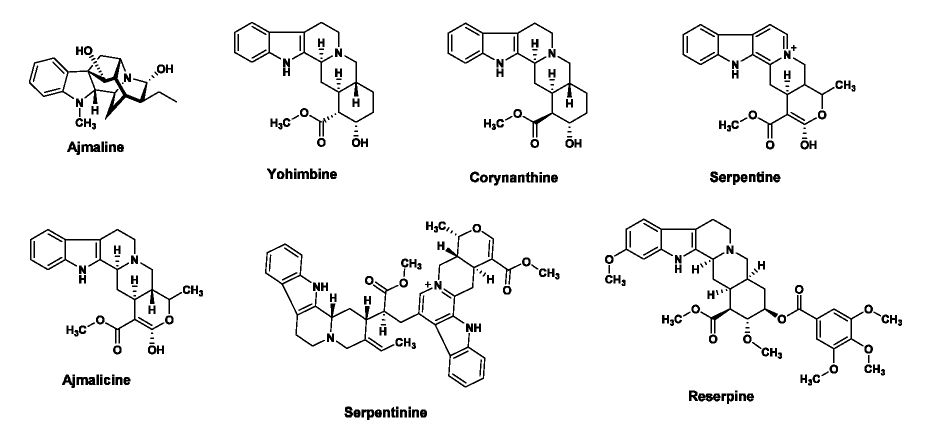
Among all the alkaloids, reserpine is the most important. It makes up about 25–50% of the total alkaloids present in the roots. Reserpine lowers blood pressure by reducing the amount of catecholamines (such as norepinephrine) and serotonin stored in nerve endings. As a result, it decreases heart activity, lowers blood pressure, and produces a calming effect.
Some other important alkaloids are also present in Rauwolfia and have valuable medicinal uses.
| Alkaloid | Therapeutic Action |
|---|---|
| Reserpine | Lowers blood pressure and acts as a sedative and antipsychotic. |
| Ajmaline | Used to treat abnormal heartbeats (antiarrhythmic). |
| Ajmalicine (Raubasine) | Dilates blood vessels and improves blood circulation. |
| Rescinnamine | Similar to reserpine but less potent in lowering blood pressure. |
| Serpentine | Produces hypotensive (blood pressure lowering) action. |
| Yohimbine | Acts as a stimulant and possesses aphrodisiac properties. |
Therapeutic Uses
Therapeutic Uses
The most important medicinal use of Rauwolfia serpentina is the treatment of hypertension (high blood pressure). Its major alkaloid, reserpine, lowers blood pressure by reducing the release of norepinephrine, a neurotransmitter that increases heart rate and narrows blood vessels.
Some important therapeutic uses include:-
1. Treatment of Hypertension
- Reserpine effectively lowers high blood pressure.
- It reduces the workload of the heart and relaxes blood vessels. 2. Antipsychotic and Sedative Action
- Reserpine has a calming effect on the central nervous system.
- It has been used in the treatment of schizophrenia, anxiety, and other psychiatric disorders.
- It also helps reduce restlessness and nervousness. 3. Treatment of Cardiac Arrhythmias
- Ajmaline is used to treat irregular heartbeats (arrhythmias).
- It helps maintain a normal heart rhythm. 4. Peripheral Vascular Diseases
- Ajmalicine widens blood vessels, improving blood flow to different parts of the body.
- It is useful in conditions caused by poor blood circulation.
Commercial Applications
Commercial Applications
Rauwolfia is commercially important because it is a rich natural source of reserpine and other valuable alkaloids. These compounds are used by pharmaceutical companies to manufacture medicines for:
- High blood pressure (hypertension)
- Mental disorders (antipsychotic medicines)
- Irregular heartbeat (antiarrhythmic drugs)
- Poor blood circulation
Opium
Opium
Bio Sources of Opium
Bio Sources of Opium
The primary source of opium is the Opium poppy (Papaver somniferum). The plant is cultivated in various regions, including Southeast Asia (notably the Golden Triangle), the Indian subcontinent, Turkey, and Afghanistan. The cultivation and production of opium are tightly controlled in many countries due to its potential for drug abuse.
Chemical Composition of Opium
Chemical Composition of Opium
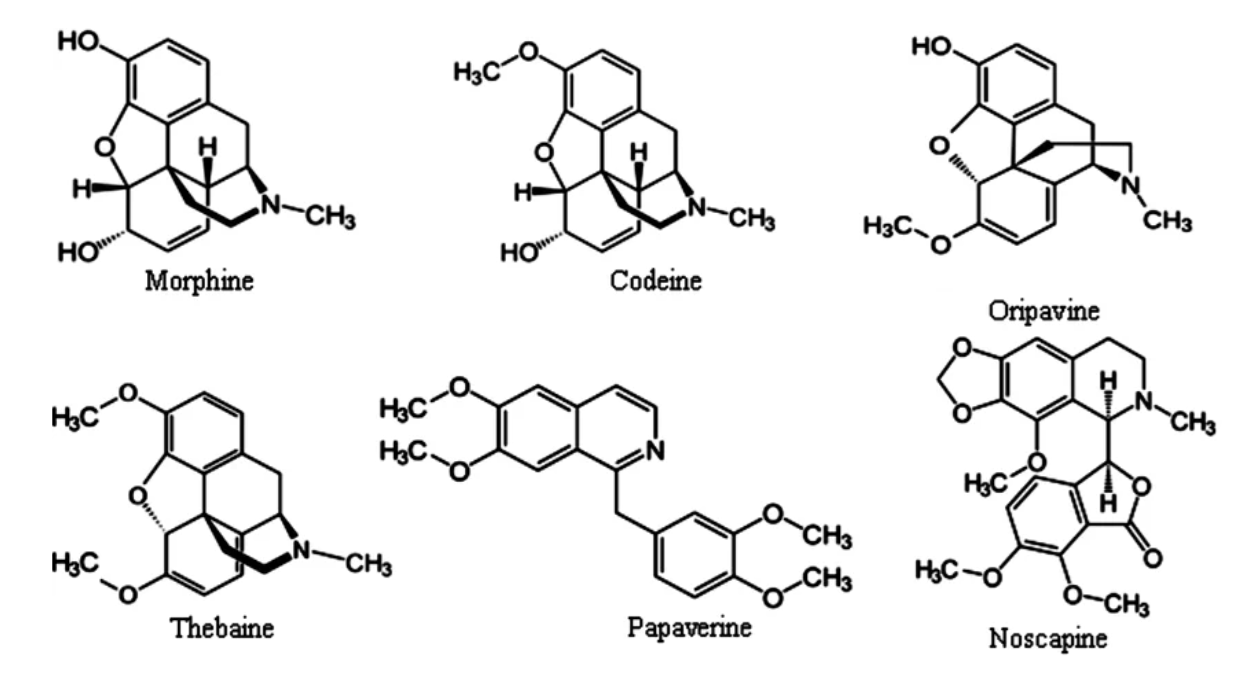
Opium contains a complex mixture of alkaloids, with the most important ones being morphine, codeine, thebaine, papaverine, and noscapine. These alkaloids are the primary active components responsible for the pharmacological effects of opium.
Opium alkaloids can be divided into two distinct chemical classes, phenanthrenes and benzylisoquinolines.- Phenanthrenes alkaloids: morphine, codeine, and thebaine
- Benzylisoquinoline alkaloids: papaverine and noscapine (narcotine)
Therapeutic Uses of Opium and Its Alkaloids
Therapeutic Uses of Opium and Its Alkaloids
Opium and its alkaloids have been utilized primarily for their analgesic, antitussive, and antidiarrheal properties. Derived from the opium poppy (Papaver somniferum), the primary active compounds in opium are morphine, codeine, thebaine, papaverine, and noscapine. Each of these alkaloids has specific therapeutic applications, which have made them crucial in various medical treatments.
1. Morphine- Analgesic: Morphine is the most abundant and potent alkaloid found in opium, and it is widely regarded for pain relief. It is used extensively in management of moderate to severe acute and chronic pain. It is particularly valuable in treating pain associated with surgery, trauma, myocardial infarction, and cancer.
- Management of Dyspnea: Morphine is also used to manage dyspnea (difficulty in breathing) in patients with congestive heart failure or chronic obstructive pulmonary disease.
- Analgesic and antitussive: Codeine is a less potent opioid compared to morphine but is widely used for its analgesic and antitussive properties. It is partially converted to morphine in the body, which contributes to its effects.
- Mild to Moderate Pain Relief: Codeine is commonly used to relieve mild to moderate pain, often in combination with other analgesics like acetaminophen or ibuprofen. It is a popular choice for treating conditions such as headaches, dental pain, and musculoskeletal pain.
- Cough Suppression: As an effective antitussive, codeine suppresses the cough reflex by acting on the central cough center in the brain. It is used in the treatment of persistent, non-productive coughs, particularly when cough is distressing or interferes with sleep.
- Management of Diarrhea: Due to its constipating effect, codeine is occasionally used to treat diarrhea, especially when other treatments are ineffective.
- Papaverine is a non-narcotic alkaloid found in opium, known for its smooth muscle relaxant properties. Unlike morphine or codeine, it does not act on the CNS but instead works by inhibiting phosphodiesterase and increasing levels of cyclic AMP and cyclic GMP, leading to muscle relaxation.
- Treatment of Vasospasms: Papaverine is used to treat vasospasms, particularly those occurring during surgical procedures such as coronary artery bypass grafting or cerebral aneurysm clipping. It helps to dilate blood vessels and improve blood flow to affected areas.
- Relief of Smooth Muscle Spasms: Papaverine is also used to relieve spasms of the gastrointestinal tract, bile ducts, and urinary tract. It is helpful in conditions like irritable bowel syndrome (IBS) and renal colic.
- Antitussive: Noscapine, another non-narcotic opium alkaloid, is primarily used to treat non-productive coughs as antitussive properties. It has a unique mechanism of action, inhibiting microtubule dynamics, which has also led to research into its potential anticancer properties.
- Potential Anticancer Agent: Noscapine used in treatment of various cancers, including breast, prostate, and lung cancer as an anticancer agent due to its ability to interfere with microtubule assembly, thereby inhibiting cell division.
- Combination Therapy: Opium alkaloids are often used in combination with other analgesics or medications to enhance pain relief while minimizing side effects. For example, codeine is frequently combined with paracetamol (acetaminophen) or aspirin in over-the-counter pain relievers.
Commercial Applications of Opium
Commercial Applications of Opium
Rather than being used in its raw form, commercial opium serves as a foundational precursor for isolating natural alkaloids and manufacturing semi-synthetic pain-killers, cough suppressants, and addiction-treatment medications.
Some key applications include:
In Pharmaceuticals: Morphine and codeine are widely used in various pharmaceutical formulations. Morphine is available in various forms, including tablets, injectables, and transdermal patches, for managing pain. Codeine is a common ingredient in over-the-counter and prescription cough syrups and pain relievers. As Raw Material for Semi-synthetic Opioids: Thebaine, an alkaloid from opium, is used as a precursor for the synthesis of semi-synthetic opioids like oxycodone, hydrocodone, and buprenorphine, which are essential in pain management and opioid addiction treatment.