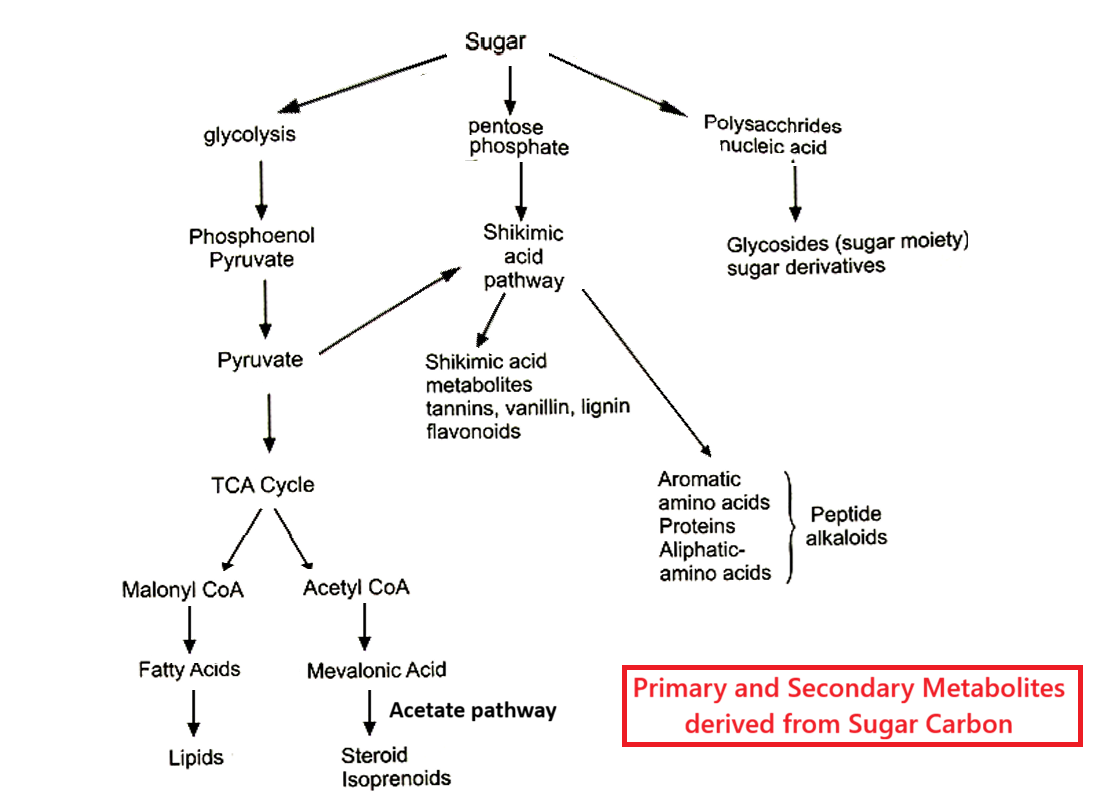
Brief study of basic metabolic pathways and formation of different secondary metabolites Through these pathways- Shikimic acid pathway, Acetate pathways and Amino acid pathway.
Primary and Secondary Metabolism
Primary and Secondary Metabolism
Plant metabolism has been divided into primary and secondary metabolism. In general, primary metabolic pathways are those present in all plant species and throughout of a plant’s life cycle, as they are essential for survival of the plant and determine growth.
In contrast, secondary metabolic pathways are not universal; the biosynthesis and accumulation of secondary metabolites are associated with specific developmental stages, linked to certain organs and tissues, or to particular moments in the plant’s life that are highly dependent on environmental conditions. Primary metabolites are compounds that are directly involved in the growth and development of a plant whereas secondary metabolites are compounds produced in other metabolic pathways that, although important, are not essential to the functioning of the plant. Secondary plant metabolites are used in signalling and regulation of primary metabolic pathways, plant defence mechanism, colouring, flavouring of the plant parts etc. Plant secondary metabolites can be divided into three major groups:- Flavonoids and allied phenolic and polyphenolic compounds,
- Terpenoids and
- Nitrogen-containing alkaloids and sulphur-containing compounds.
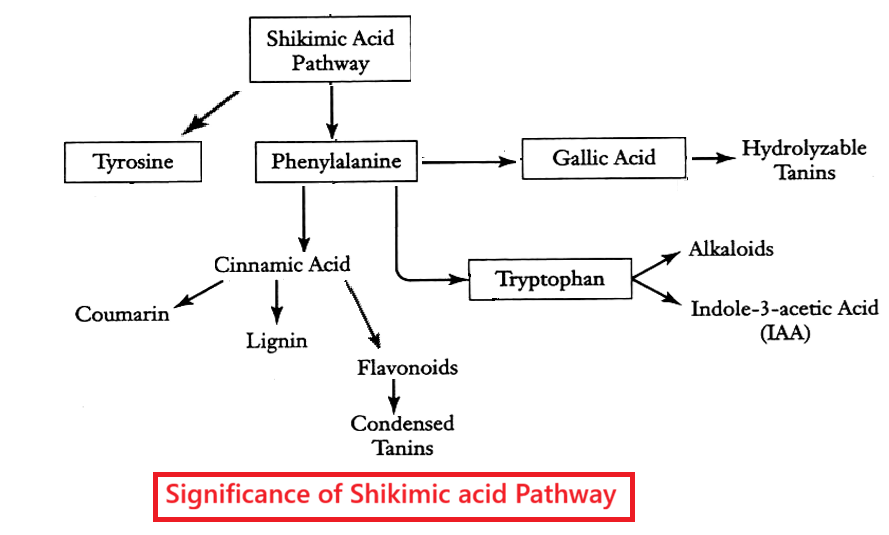
- It provides Phenyl alanine and tyrosine, which are the starting material for biosynthesis of some phenolics. The phenylpropanoids are then used to produce the flavonoids, coumarins, tannins and lignin.
- This pathway is used for the biosynthesis of Gallic acid, which further provides hydrolysable Tannins.
- Shikimic acid is a precursor for indole, indole derivatives and aromatic amino acid tryptophan and tryptophan derivatives and many alkaloids and other aromatic metabolites.
- Monoterpenes
- Sesquiterpenes
- Diterpenes (some)
- Triterpenes
- Steroids
- Sterols
- Fatty acids
- Polyketides
- Anthraquinones
- Many flavonoids
- Essential oils
- Resin acids
- Oleoresins
- Carotenoids
- Steroids
- Triterpenoids
- Phytosterols
- Gibberellins
- Brassinosteroids
- Abscisic acid (derived mainly from carotenoids)
- Phytosterols
- Steroidal saponins
- Steroidal alkaloids
- Menthol (Mentha)
- Limonene (Citrus)
- Camphor (Cinnamomum camphora)
Shikimic Acid Pathway
Shikimic Acid Pathway
The shikimate pathway (shikimic acid pathway) is a seven-step metabolic pathway used by bacteria, fungi, algae, some protozoans, and plants for the biosynthesis of folates and aromatic essential amino acids (phenylalanine, tyrosine, and tryptophan). This pathway is not found in animals.
Shikimic acid, commonly known as its anionic form shikimate, is a cyclohexene, a cyclitol and a cyclohexane carboxylic acid. Shikimic acid is a key intermediate derived from carbohydrate for the biosynthesis of C6 – C3 units (Phenylpropane derivatives). Besides serving as precursor for the biosynthesis of amino acids, Shikimic acid is also an intermediate in production of tannins, flavones, coumarins and vanillin.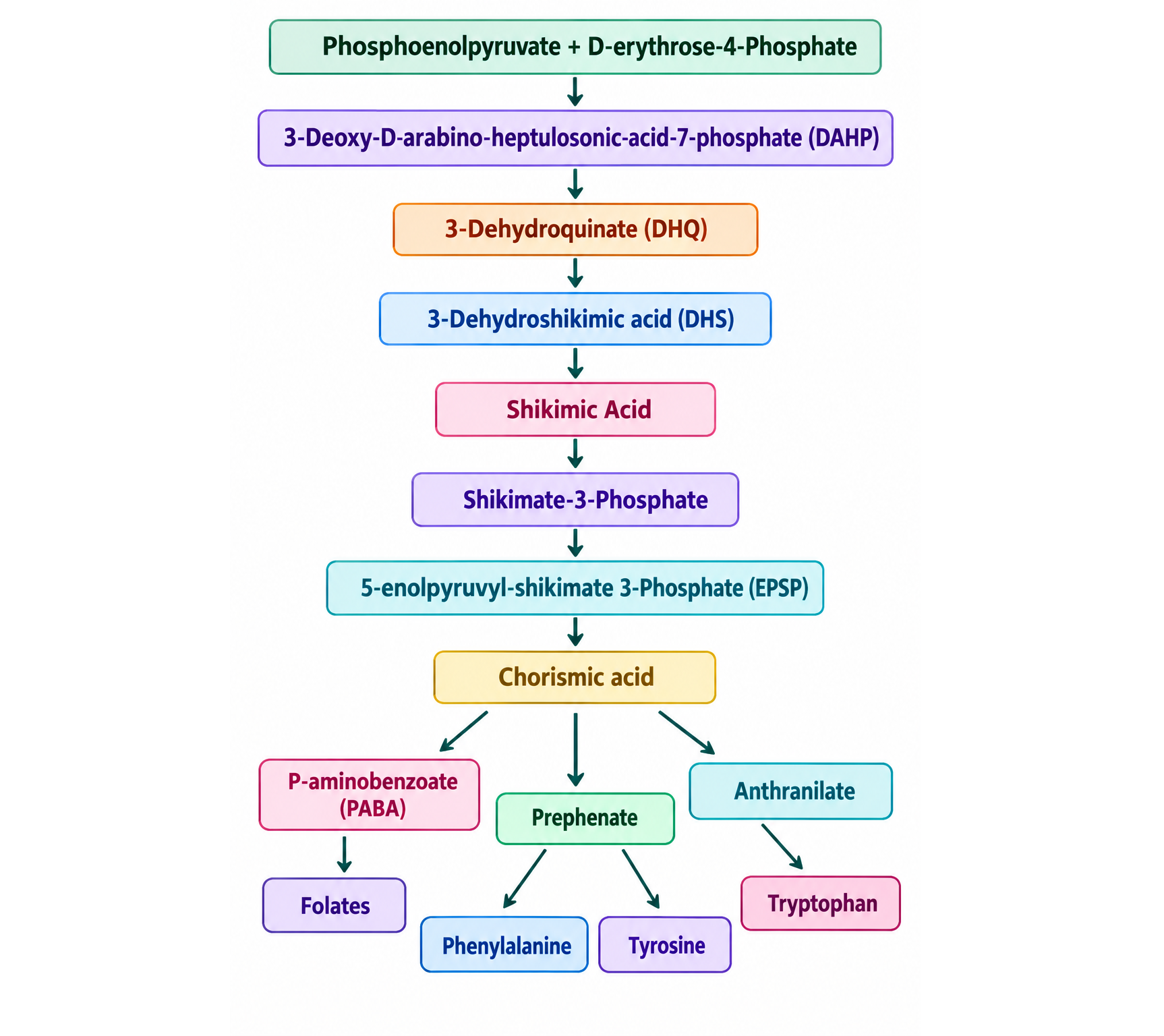 Significance of Shikimic acid pathway:
Amino Acid Pathway
Amino Acid Pathway
Amino acids are organic compounds containing amine (-NH2) and carboxyl (-COOH) functional groups, along with a side chain (R) group specific to each amino acid. Many amino acids contain only carbon, hydrogen, oxygen and nitrogen, but other atoms may be present (e.g. sulphur in cystine, and iodine in thyroxin).
Amino acid synthesis is the set of biochemical processes (metabolic pathways) by which the amino acids are produced. Of the basic set of twenty amino acids, humans cannot synthesize eight and these are called the essential amino acids. Essential amino acids are amino acids that cannot be synthesized by the human body in sufficient amounts and therefore must be obtained through the diet.. In addition, the amino acids arginine, cysteine, glycine, glutamine, histidine, proline, serine, and tyrosine are considered conditionally essential. The pathways for the synthesis of nonessential amino acids are quite simple. Glutamate dehydrogenase catalyses the reductive amination of α-ketoglutarate to glutamate. A transamination reaction takes place in the synthesis of most amino acids.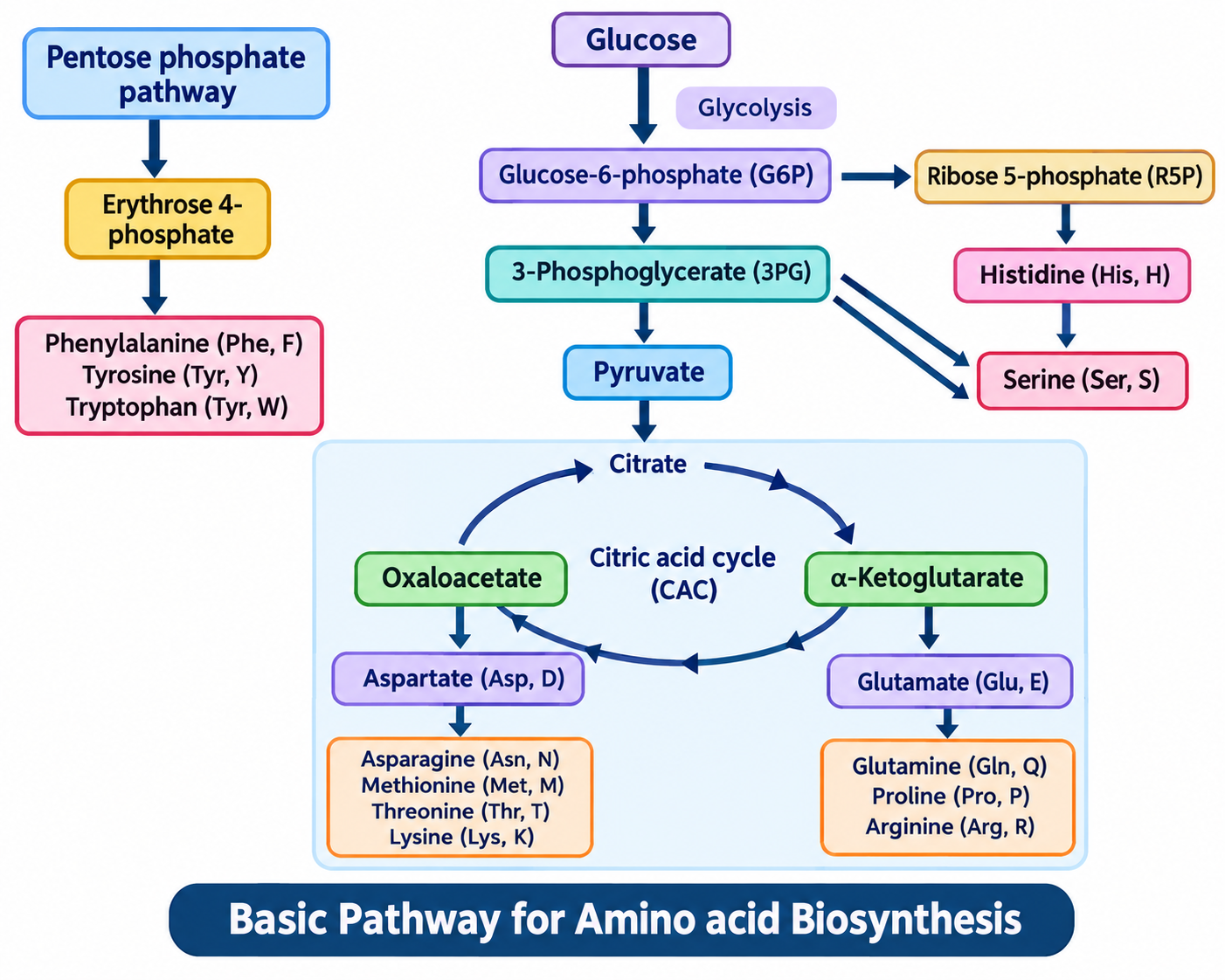
Acetate Pathway
Acetate Pathway
The acetate pathway is a biosynthetic pathway in which acetyl-CoA serves as the starting material for the synthesis of terpenoids. It proceeds through the formation of mevalonic acid (MVA) and isopentenyl pyrophosphate (IPP), ultimately leading to the production of various isoprenoids such as sesquiterpenes, triterpenes, and sterols. Hence, it is also known as the mevalonate (MVA) pathway.
Acetate pathway may be defined as: A biosynthetic pathway in which acetyl-CoA serves as the primary precursor for the synthesis of numerous natural products, particularly terpenoids, steroids, fatty acids, and polyketides. Acetyl-CoA participates in acetate pathway through two distinct biosynthetic routes. Thus, the two Major Branches of the Acetate Pathway are: (A) Acetate–Mevalonate (MVA) Pathway: This pathway synthesizes isoprenoids (terpenoids). The main product of this part are: -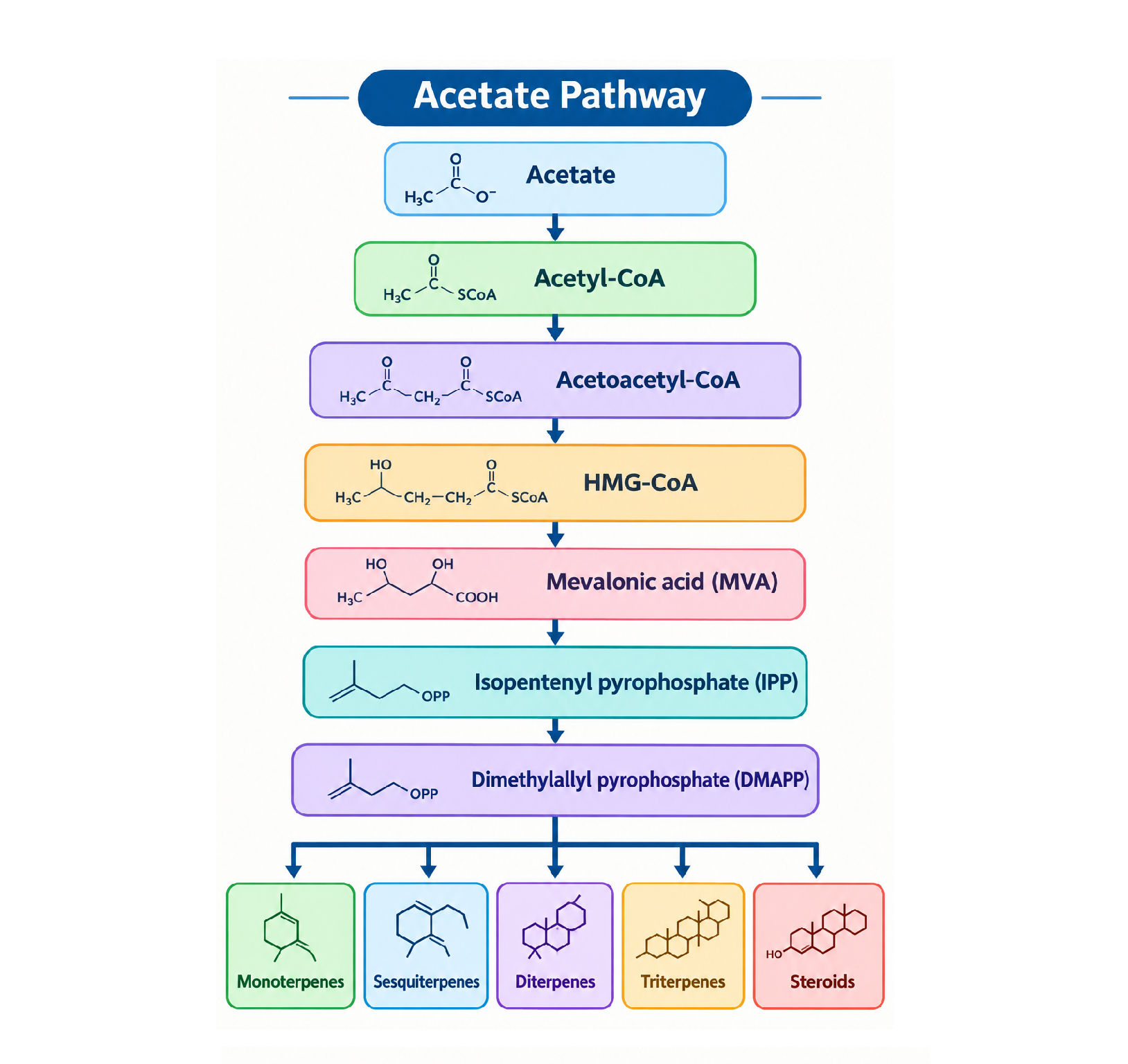
| Biosynthetic Role | Biosynthetic Phytochemical Products |
|---|---|
| Biosynthesis of Terpenoids |
|
| Formation of Plant Hormones |
Several plant hormones originate from isoprenoid precursors, including:
|
| Biosynthesis of Steroids |
The pathway is responsible for the formation of:
|
| Production of Essential Oils |
Many aromatic medicinal plants produce volatile terpenoids, including:
|